


How to Become a Celebrant in Australia
Are you thinking about becoming a celebrant but unsure where to begin? Celebrancy combines working with people, writing, public speaking and careful organisation. For most civil celebrants, weddings are the main focus: meeting couples, helping them create a ceremony that feels personal, conducting the ceremony and completing the marriage paperwork correctly. Some celebrants also conduct funerals, memorials, naming ceremonies, renewals of vows and other ceremonies.
To become a Commonwealth-registered marriage celebrant in Australia, you must complete the CHC41015 Certificate IV in Celebrancy and then apply to the Australian Government Attorney-General's Department for registration. This course helps you learn the foundational skills required for celebrancy work, including interviewing couples, planning and writing ceremonies, presenting to an audience, and managing legal documents and records.
With ITAC, you can study online, start at any time and fit your coursework around work, family and other commitments. Most students finish in six months or less, and some finish sooner. You have a full 12 months to complete the course, with monthly extensions available if you need more time. Throughout your studies, you will receive support from experienced celebrant trainers.
This guide explains what celebrancy involves, how the course works and what you need to do after graduation to apply for registration.
What does a marriage celebrant actually do?
Most celebrancy work is weddings. A marriage celebrant works with a couple to make sure their wedding is personal, well organised and legally valid.
Before the wedding, the celebrant explains the wedding process, receives the Notice of Intended Marriage, checks identity and other required documents, discusses the couple's preferences and prepares the ceremony. This involves confirming the order of events and writing and refining the script with the couple.
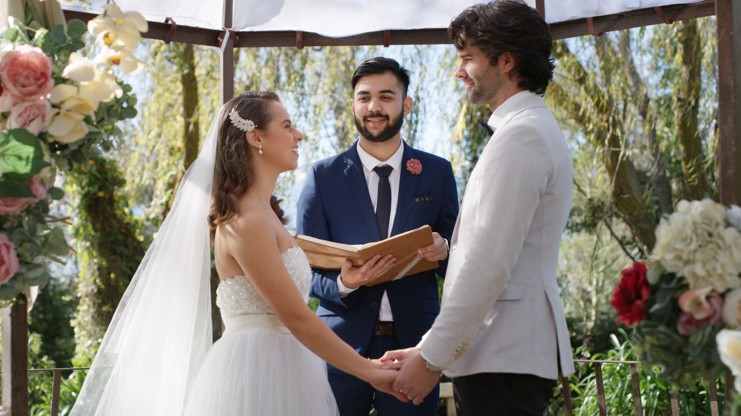
On the day, the celebrant arrives prepared, coordinates key people, leads the ceremony, includes the required legal wording, and guides the couple and witnesses through the signing process. After the ceremony, the celebrant finalises and lodges the required paperwork.
It is a people-focused role, but it also involves detailed administration. A good celebrant needs to be warm and natural with their clients, while still being professional and extremely well organised, particularly as it applies to legal documents.
Is celebrancy right for you?
You do not need to be the loudest person in the room or an experienced professional speaker to become a celebrant. Many successful celebrants are calm, thoughtful and organised people who develop their confidence through training and practise.
You need to enjoy working closely with a wide range of people. Celebrants listen carefully, ask good questions, write in a clear and natural style and speak comfortably to groups. They also follow instructions, manage deadlines, check documents carefully and stay calm when plans change at the last minute.
Most marriage celebrants are self-employed, so the role also involves managing enquiries, appointments, bookings, invoices and client communication. Delivering ceremonies is only part of the work – celebrants are business owners and entrepreneurs.
How to become a celebrant in Australia
There are six main steps from enrolment to registration. The CHC41015 Certificate IV in Celebrancy gives you the qualification and practical skills; the Attorney-General's Department then completes the separate registration process.
Step 1: Enrol in the CHC41015 Certificate IV in Celebrancy with ITAC
The first step is to enrol in ITAC's CHC41015 Certificate IV in Celebrancy. This nationally recognised qualification is required for registration and has a strong focus on weddings.
The course is delivered online in a supported, self-paced format. You can start at any time and fit your study around your existing commitments. Most students finish in six months or less, and some finish sooner. Your enrolment includes a full 12 months, and monthly extensions are available if you need additional time.
ITAC organise the course into practical modules that bring related knowledge and assessment together. This makes the learning easier to follow and reduces unnecessary repetition. Instead of treating each topic as a disconnected subject, you learn how communication, ceremony planning, presentation, marriage law and documentation work together in the actual role.
You will also receive support from an experienced celebrant through live webinars, phone and email assistance, assessment feedback and practical guidance. The aim is to help you become confident completing the work of a celebrant, not simply work through academic theory with no relevance to the real world.
Step 2: Learn the knowledge needed for marriage celebrancy
The theory part of the course covers the areas you will use when working with couples and other clients. You learn how to interview clients, plan and write ceremonies, communicate with people from different backgrounds, prepare for presentations and manage professional responsibilities.
Marriage law and paperwork are a major part of the course. You learn the legal requirements for marriage in Australia, how to work through common issues, what documents are required and how to complete them accurately.
There are no formal exams or long academic essays. Assessment uses practical formats such as short-answer questions, case studies, realistic scenarios, research activities, planning tasks and document preparation. Your trainer marks each assessment and gives you feedback where changes are needed.
Step 3: Complete the practical celebrancy assessments
Celebrancy is a practical role, so the course includes practical assessment as well as theory. You will research, plan and deliver nine simulated ceremonies, including five simulated weddings.
The first practical ceremonies help you build confidence with client interviews, planning, writing, rehearsals and presentation. The wedding assessments then introduce the legal and practical situations a marriage celebrant needs to be able to manage, including shortened notice periods, previous marriages, foreign documents, uncertainty about an overseas marriage and the use of an interpreter.
Students usually deliver these simulations ceremonies from home, using suitable family members, friends or other participants. Some tasks require photographs or video evidence. These assessment tasks require students to organise ceremonies with varying audience sizes.
By the end of the practical component, you will be confident across the main stages of the civil celebrant's role: speaking with clients, confirming their needs, planning the ceremony, writing the content, rehearsing, presenting, responding to practical issues and completing marriage documents.
Step 4: Receive your certificate and transcript
Once every theory and practical requirement has been completed to the required standard, ITAC issues your CHC41015 Certificate IV in Celebrancy and Statement of Results. Keep both documents, as you will need them for your registration application.
Graduating means you have completed the qualification. It does not yet mean you are authorised to conduct legal marriages; registration is the next step.
Step 5: Apply to the Attorney-General's Department
After graduation, create an account in the Marriage Celebrants Portal and submit your application to the Attorney-General's Department.
You will need your certificate and transcript, identity documents, a current CV, two independent referee reports and the completed consent form for a Nationally Coordinated Criminal History Check. The Registrar also considers whether you are at least 18 and suitable to hold the responsibilities of a marriage celebrant.
The application fee is currently $400 and is non-refundable. If your application is approved, a separate registration charge applies for the first financial year.
The Attorney-General's Department assesses applications in the order received and has up to six months to decide a complete application. Applications cannot be fast-tracked, so make sure every document is complete and consistent before you submit it.
Until your registration is confirmed, you cannot advertise yourself as an authorised marriage celebrant, accept a Notice of Intended Marriage or conduct a legal wedding.
Step 6: Receive your registration and begin conducting legal weddings
If your application is approved, pay the registration charge by the due date. Once your registration is confirmed, your details are added to the public Register of Marriage Celebrants and you can begin accepting legal wedding bookings.
Registered celebrants have ongoing responsibilities, including keeping their details current, completing compulsory professional development and paying the annual registration charge unless an exemption applies. These requirements help celebrants keep their legal knowledge and professional standards up to date.
How long does it take to become a celebrant?
Most ITAC students finish the Certificate IV in six months or less, and some finish sooner. You have a full 12 months to complete the course, which gives you room to manage work, family, illness or other interruptions. If you need longer, extensions are available for a monthly fee.
Your pace will depend on how regularly you study, how quickly you complete assessment feedback and how easily you can organise the participants and evidence needed for the practical ceremonies.
After graduation, allow additional time for the government registration process. The Attorney-General's Department has up to six months to assess a complete application. Your overall timeframe therefore includes both the course and the separate registration stage.

Can you study celebrancy online?
Yes. ITAC delivers the CHC41015 Certificate IV in Celebrancy online, so you can study from anywhere in Australia and start at any time. Your learning materials, assessments and submissions are managed online, with support available through live webinars, phone, email and trainer feedback.
Online study does not mean the course is only reading or clicking through slides. You still complete genuine practical work, including client interviews, ceremony planning, presentations, simulated weddings and marriage documents.
You will need regular access to a computer and reliable internet, word-processing and PDF software, a phone or camera for recording evidence and suitable people to take part in the simulations. Later practical tasks also require access to a microphone or PA system and a larger audience.
Why study celebrancy with ITAC?
At ITAC, we have designed our celebrancy course for busy adult learners who want flexibility without being left to work everything out alone. You can start when you are ready, study at your own pace and contact experienced trainers when you need help. ITAC's course consists of the following:
- A practical, module-based course structure that connects related skills and reduces repetition.
- Experienced celebrant trainers who provide webinars, guidance and detailed assessment feedback.
- A strong marriage celebrancy focus, including five simulated weddings and realistic marriage paperwork.
- All required learning materials included, with no formal exams or long academic essays.
- A Celebrant Business Pack with templates, scripts, forms and planning resources for use after registration.
ITAC has supported more than 30,000 students across Australia for almost two decades. Interest-free payment plans are available.
Frequently asked questions about becoming a celebrant
Do I need to complete a celebrant course to marry people?
Yes. To marry couples in Australia you will need to complete the accredited qualification and apply for registration with the Commonwealth government.
Can I enrol without previous celebrancy experience?
Yes. You do not need previous celebrancy experience or another celebrancy qualification before enrolling. You do need functional English, basic digital skills and the ability to complete written, spoken and practical assessment tasks. ITAC can discuss course suitability with you before enrolment.
Will I be registered when I finish the course?
No. Finishing the course gives you the qualification and transcript needed for your application. Registration is completed separately by the Attorney-General's Department and is not automatic.
Do celebrants mainly conduct weddings?
Yes. For most civil celebrants, weddings are the main area of work. Some marriage celebrants also conduct funerals, memorials, baby naming ceremonies or renewals of vows.
Do I need to be an Australian citizen?
No. Australian citizenship is not required to apply for registration as a Commonwealth-registered marriage celebrant. ITAC students must reside in Australia, and you must be at least 18 when you apply for registration.
How much does the government application cost?
The current application fee is $400. If your application is approved, the first registration charge is separate. Current government information is available on the Attorney-General's Department application page.
Can I study while working or caring for family members?
Yes. The course is online, self-paced and available to start at any time. Many students study around work, parenting and other responsibilities. The full 12-month enrolment period gives you flexibility, while the six-month study schedule provides a clear pace and structure.
Start your celebrancy course with ITAC
To become a Commonwealth-registered marriage celebrant, you must first complete the CHC41015 Certificate IV in Celebrancy. You can enrol with ITAC at any time and complete the course online with support from experienced celebrant trainers. The course covers ceremony planning and presentation, marriage law, marriage paperwork and the practical ceremony assessments required to complete the qualification.
After you graduate, ITAC will issue your certificate and transcript. You can then apply to the Australian Government Attorney-General’s Department for registration. The Department assesses your application separately, so completing the course does not register you automatically; it gives you the qualification required to apply.
Enrol online with ITAC and start your celebrancy course today.

Featured Resources








Ready to get started?
Enrol today with local trainer support.
Enrolments Open