


Study Modes
Structured, supported & flexible options for mature learners.

ITAC courses are designed to be practical, structured and easier to follow. Instead of requiring students to work through a long list of separate units one by one, we instead group related units into study modules.
This module-based structure helps students understand how the units connect, reduces unnecessary repetition, and makes the course feel more like real workplace learning. Students still complete the required training, assessment and evidence for their qualification, but in a clearer and more efficient format.
The result is a course that is easier to navigate, shorter in duration, more relevant to real work, and better suited to building practical graduate skills.
Most nationally recognised qualifications are made up of individual units of competency. In many courses, students complete these units one at a time, even where several units contain related or overlapping content. This takes a lot of time and is very disengaging.
To solve this, ITAC uses a module-based structure by grouping related units into practical study modules. Each module brings together units that naturally fit together because they share similar skills, knowledge areas, workplace tasks or professional responsibilities.
This reduces unnecessary duplication. For example, if several units include similar requirements about communication, safety, privacy, documentation or workplace procedures, students generally do not need to repeat the same learning and assessment activities multiple times.
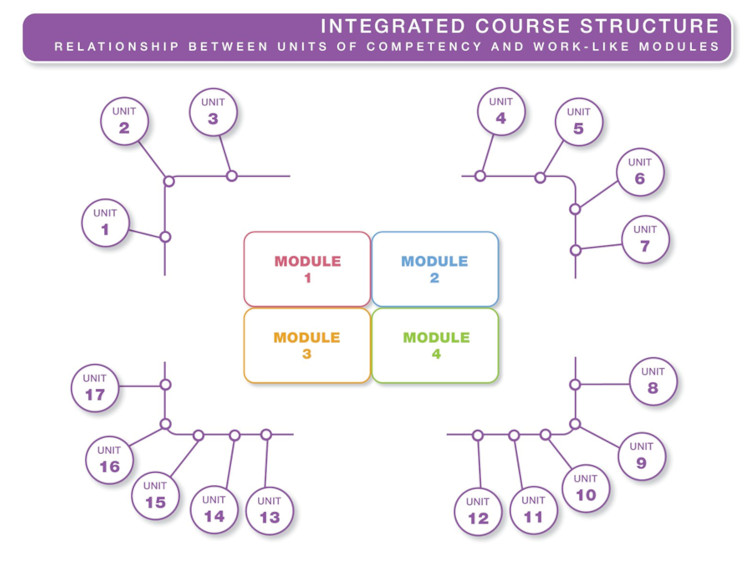
The graphic below provides a general example of how units may be grouped into study modules. The exact module structure varies depending on the course, qualification requirements and assessment design.
Module-based learning makes the course clearer and more efficient by reducing unnecessary repetition and helping students focus on meaningful learning.
This can help students:
Students still need to meet the required standard for their qualification. The benefit is that the course is organised in a way that is easier to follow, more practical and more efficient.
Module-based learning does not remove course requirements or lower the standard students must meet. Students still complete the required training, assessment, practical tasks and workplace evidence for their qualification.
Where units contain overlapping content, ITAC may reduce unnecessary repetition in how the course is delivered and assessed. This allows students to focus on demonstrating the required skills and knowledge without completing repeated tasks that add little value to their learning.
This approach keeps the course efficient while maintaining the integrity of the qualification. It also helps protect the value of the qualification for graduates, employers and the industries they work in.
Module-based learning gives students a clearer, more practical way to complete their course. It reduces unnecessary repetition, connects related skills and knowledge, and helps students focus on the parts of the course that matter most.
Students still complete the required training, assessment and evidence for their qualification. The difference is that the course is structured in a way that is easier to follow, more efficient to complete, and better aligned with real workplace expectations.


Study related content together through a clearer, more efficient course structure.

Trainer visits and tailored support during your school or childcare placement.



Build a study routine around work, family and other commitments, without fixed class times or due dates.
Access all webinars, assessments and course resources online whenever you are ready to study.
Experienced local trainers to help with course content, assessments, placement and study planning.

Experience our range of innovative programs at ITAC, enhancing your educational journey towards success.